The First Person Who Taught Me What Love Costs

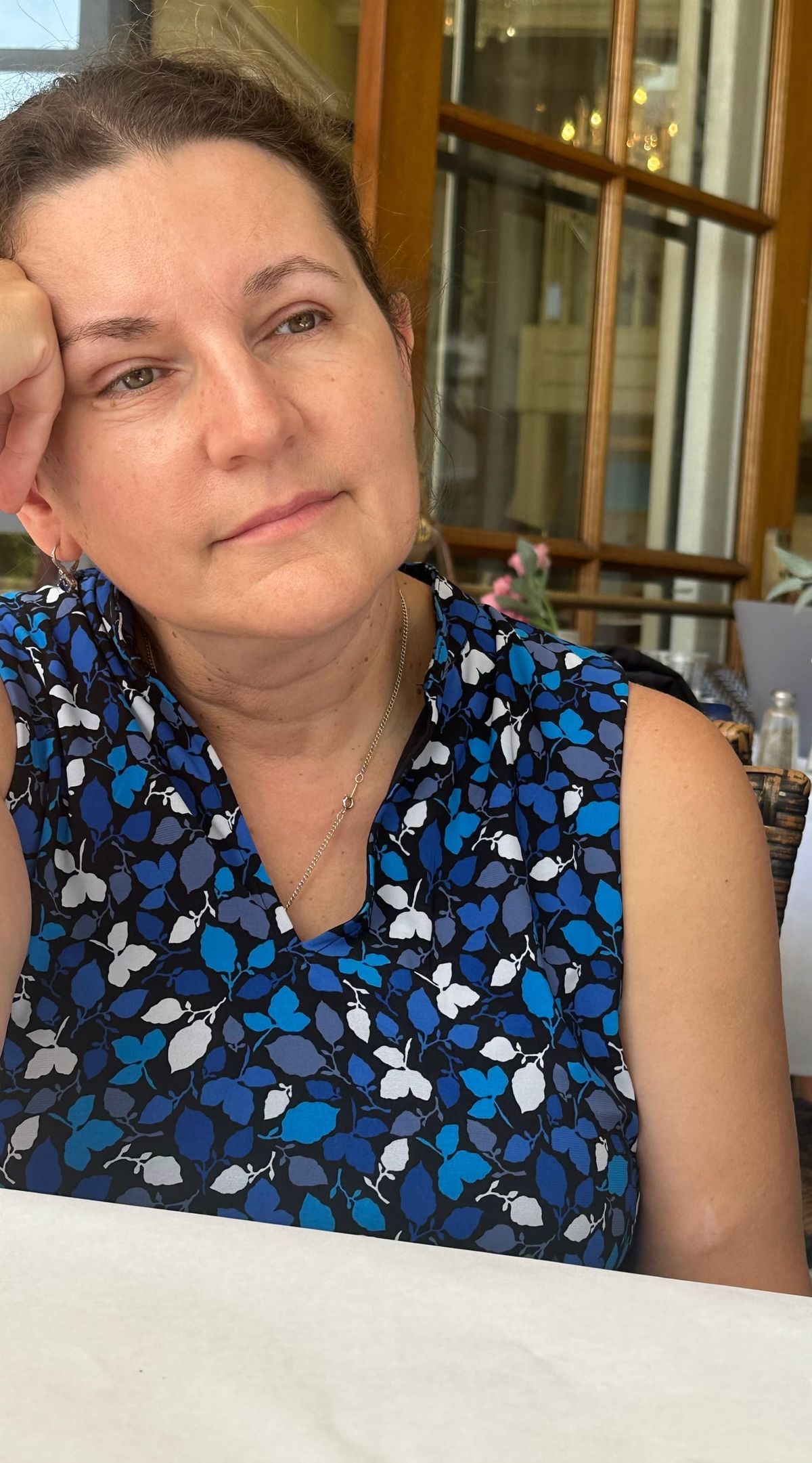
For my mother, on her birthday.
There are certain kinds of love we understand only after we have spent years receiving them.
As children, we rarely ask what love costs the person giving it. We simply live inside of it. We wake up and breakfast appears. We become sick and someone stays awake. We are afraid and someone makes herself brave. We stumble, and there are hands beneath us before we even realize that we are falling.
For many of us, the first place we ever encounter this kind of love is our mother.
And perhaps one of the quiet tragedies of childhood is that we are loved most extravagantly at precisely the age when we are least capable of understanding the price.
I know that now.
I did not know it then.
Saint Paul writes of Christ that He “emptied Himself, taking the form of a servant” (Philippians 2:7).
The Church calls this kenosis — self-emptying.
It is one of the great mysteries at the center of Christianity: that divine love does not reveal itself primarily by taking, possessing, or demanding, but by giving itself away.
God does not remain distant from His creation.
He comes down.
He enters the womb.
He becomes small enough to be carried.
He hungers.
He thirsts.
He serves.
He washes feet.
And finally, He stretches His arms upon the Cross.
This is what Christianity dares to say about love:
Love costs something.
Real love always does.
And long before I knew the word kenosis, long before I encountered the Fathers, long before I could understand the strange and beautiful theology of a God who empties Himself for those He loves, I had already seen a small human icon of it.
I called her Mama.
A mother gives herself away in increments so small that a child almost never notices.
A few hours of sleep here.
A meal eaten later.
A worry kept quiet.
Money spent somewhere else.
A plan changed.
An afternoon surrendered.
A prayer whispered when everyone else is asleep.
A thousand little deaths to the self that will never appear in photographs.
That is the strange thing about sacrifice.
The greatest sacrifices are often the ones nobody remembers.
There are no monuments for the nights a mother stayed awake.
No photographs of the fears she kept from her children.
No applause for the things she wanted but quietly went without.
No one keeps a record of every time she said, “I’m fine,” because there was something more important than whether she was fine.
Her children were watching.
Her children needed her.
And so she carried things they were too young to carry themselves.
That was love.
I simply did not know its name yet.
The older I become, the more devastating one of the Ten Commandments becomes to me:
“Honor your father and your mother.”
As a child, I understood this mostly as obedience.
Listen to your parents.
Behave.
Do what you are told.
But I wonder whether adulthood reveals another dimension of the commandment.
Perhaps honoring our parents eventually means remembering.
Remembering that they had lives before ours.
That our mothers were once little girls.
That they had dreams before they knew our names.
That they became frightened sometimes.
That they made mistakes.
That they were learning how to live while simultaneously teaching us how to live.
There is a moment in adulthood when our Mamă suddenly becomes a person.
Not because she was not one before.
But because we finally acquire the eyes to see her.
And that realization can break your heart.
Because suddenly you begin remembering your childhood differently.
You remember the things she did.
The places she drove you.
The meals she prepared.
The phone calls.
The questions.
The warnings you rolled your eyes at.
The concern you once mistook for annoyance.
And you begin to understand that behind so many ordinary moments was a woman silently saying:
You matter more to me than my convenience.
That is what love costs.
There is another image I cannot escape.
Every Orthodox Christian has seen it.
The Theotokos holding Christ.
God has become a child, and a woman is holding Him against her body.
The One who holds the universe allows Himself to be held.
The One who feeds creation receives milk from His mother.
The One before whom the angels tremble falls asleep in her arms.
And somewhere within that mystery is something Christianity understands profoundly:
Motherhood is holy because love becomes physical.
It becomes hands.
It becomes food.
It becomes sleeplessness.
It becomes worry.
It becomes presence.
It becomes I am here.
Perhaps this is why some of the holiest things anyone has ever done for us looked completely ordinary while they were happening.
Mama mea,
there are things I understand now that I could never have understood as your little boy.
I understand now that love is expensive.
And I understand that you paid for so much of mine quietly.
There were sacrifices I saw.
There were sacrifices I did not see.
And I suspect there were sacrifices I will never know about at all.
But God knows them.
Every sleepless night.
Every worry.
Every prayer.
Every tear hidden before walking back into the room.
Every time you gave something of yourself so that your children might have a little more.
God saw it.
And today, on your birthday, I do not simply want to celebrate the day you were born.
I want to thank God that you were born.
Because before I understood theology, you taught me something about sacrifice.
Before I understood kenosis, I watched you give.
Before I understood that love sometimes carries a cross, I watched you carry things for me.
Before I learned to sing about God, you were already teaching me something about Him.
And perhaps that is one of the greatest gifts a mother can give her son:
not merely life,
but his first vocabulary for understanding love.
One day, when I was very small, I thought you were simply part of the world.
My mamă was there.
My mamă had always been there.
My mamă would always be there.
Children have the beautiful arrogance of believing that the people who love them are permanent.
Growing older teaches us otherwise.
And perhaps that is why the commandment to honor our parents carries such urgency.
There are flowers that must be given while hands can still receive them.
There are questions that must be asked while voices can still answer them.
There are embraces that should not be postponed.
There are words that should not wait for funerals.
There is gratitude that belongs to the living.
So I want mine to reach you now.
While I can still say it.
While you can still hear it.
Thank you, Mom.
For the things I remember.
For the things I forgot.
For the things I never noticed.
For the things only God knows.
And forgive me for every moment when I received your love without recognizing what it cost you.
Perhaps that is part of becoming a man:
finally looking back at the woman who raised you and realizing that so much of what you once called home was actually her love made visible.
Happy birthday, Dear Mom.
May God grant me many years to honor the woman who gave me hers.