Love Your Enemies: Where Grace Finds Room to Dwell

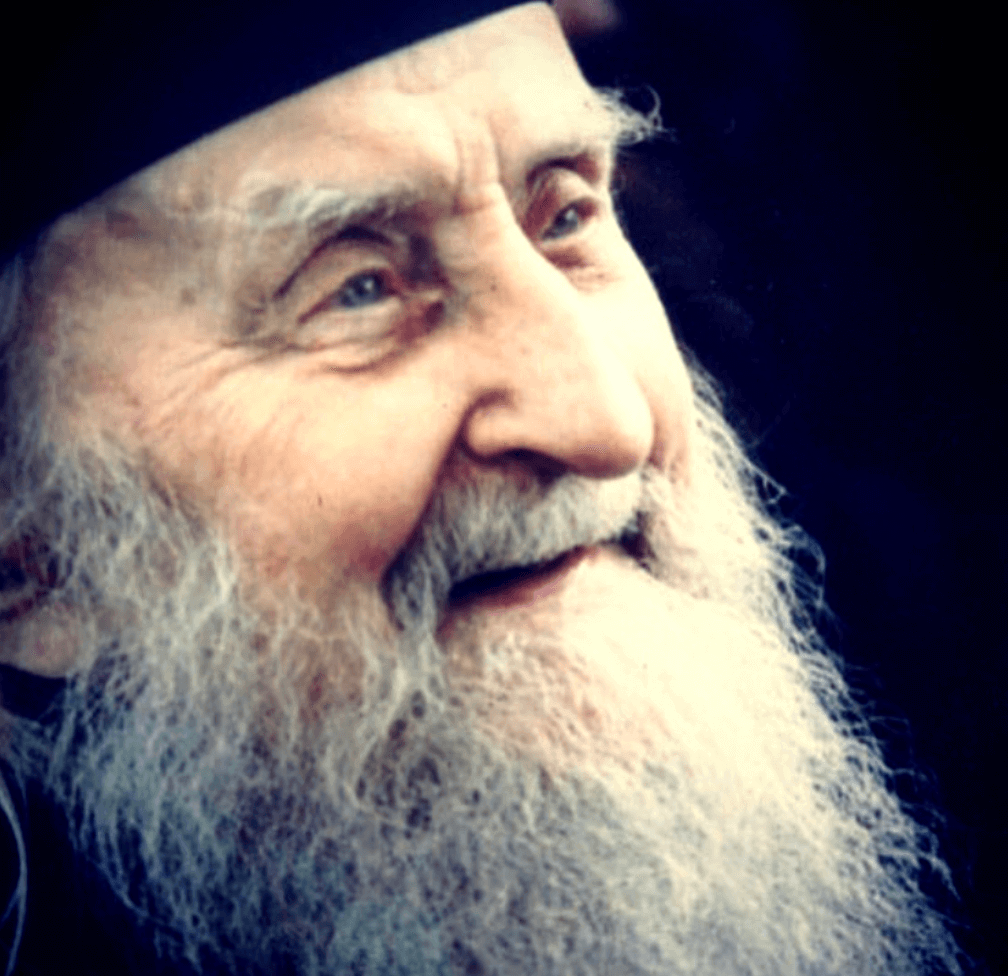
St. Silouan the Athonite, St. Sophrony of Essex, and the frightening measure of Christian love.
This week’s reflection began, fittingly, at home.
After my father had “dibs” on the subject of my last reflection, I decided that this week belonged to my mother. I brought her several possible themes—different questions drawn from Scripture, the Fathers, and the lives of the Saints—and asked her to choose my homework.
She chose the love of enemies.
And I am profoundly thankful that I can still do this.
There is a particular grace in being able to sit with one’s mother and speak about the things of God; to listen, to disagree perhaps, to ask questions, to learn, and then to walk away with something to wrestle with during the week. God has given me the gift of having people in my life with whom theology does not have to remain confined to books. It can enter the kitchen. The telephone call. The family conversation. Ordinary life.
Years ago, I began keeping what I call my thematics folder: a collection of themes traced through Scripture and patristic writings - repentance, humility, suffering, obedience, prayer, judgment, mercy, love. Over time, passages begin speaking to one another. A Gospel verse suddenly illuminates something written by a Father centuries later; the life of a Saint makes concrete something that previously existed only as theology on a page.
So, Mamă, thank you for this week’s homework.
Because you chose perhaps one of the hardest lessons Christianity has ever given us:
Love your enemies.
Not tolerate them.
Not simply avoid taking revenge.
Not merely stop speaking badly about them.
Love them.
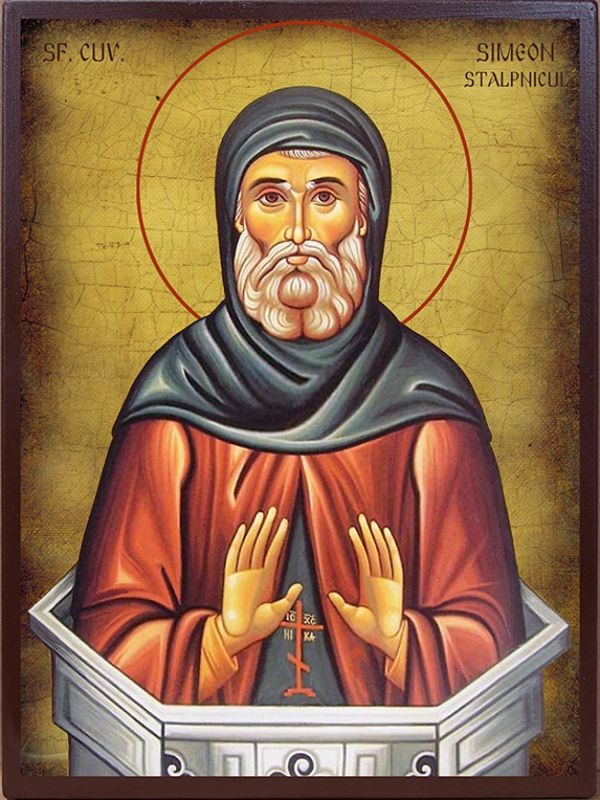
And it is here that St. Silouan the Athonite gives us one of the most demanding measures of the spiritual life.
For St. Silouan, love for enemies was not some advanced Christian virtue reserved for especially holy people. It was evidence of whether the grace of the Holy Spirit had truly taken root within the human heart.
A person may pray.
A person may fast.
A person may make prostrations, attend every service, know the canons, defend every rubric, quote the Fathers, kiss every icon, and speak passionately about the preservation of Holy Orthodoxy.
And yet there remains a terrifying question:
What happens in his heart when he remembers the person who wounded him?
That question cuts through appearances.
Because Christianity becomes very easy when love is directed toward those who love us.
Christ Himself tells us this.
“For if you love those who love you, what reward have you?”
The real battlefield begins when the face before us belongs to someone who has humiliated us, betrayed us, slandered us, undermined us, wounded our family, questioned our integrity—or simply made our life unbearably difficult.
Then the Gospel ceases to be theoretical.
Then Christ asks something that feels almost impossible:
Love him anyway.
St. Silouan learned that the ability to love an enemy does not originate simply in human temperament. It is the work of grace. The natural human heart wants vindication. It wants the record corrected. It wants the other person to finally understand what he did. Sometimes, if we are honest, it wants the offender to suffer just enough to understand how badly he made us suffer.
Grace wants something entirely different.
Grace looks at the enemy and says:
Lord, have mercy on him too.
St. Sophrony of Essex, the spiritual son and biographer of St. Silouan, carried this teaching even further into his theology of personhood. Christianity does not permit us to divide humanity neatly into those worthy of our love and those unworthy of it. Christ stretches the human heart until it begins, however painfully, to embrace the whole Adam - the whole human family.
This is why love of enemies stands so near the summit of Christian life.
Because when I pray sincerely for someone who has wounded me, something extraordinary happens:
I stop asking God merely to stand on my side.
I begin asking Him to save us both.
And perhaps nowhere is this teaching more urgently needed today than inside the Church herself.
It is painful to say, but anyone who has spent enough time around parish life knows how easily disagreements can become personal. Priest and parish council. Parishioner and parishioner. Old leadership and new leadership. Questions about money, buildings, authority, elections, traditions, personalities, decisions, jurisdictions.
A disagreement begins over something practical.
Then slowly, almost imperceptibly, the language changes.
“My brother” becomes “that man.”
“My priest” becomes “him.”
“My parishioner” becomes “the problem.”
Meetings become battlefields. Emails become weapons. Every action is interpreted according to the worst possible motive. People begin collecting evidence against one another. Conversations happen in corners. Camps form.
And somehow everyone remains convinced that they are defending the Church.
But we must ask ourselves something uncomfortable:
What exactly are we defending if, in defending it, we lose the commandment of Christ?
We can win the vote and lose our brother.
We can win the argument and lose our peace.
We can prove ourselves canonically correct and still allow resentment to make its home inside the heart.
We can even believe that we are fighting for Christ while gradually becoming incapable of seeing Christ in the person standing opposite us.
This does not mean that truth does not matter.
It does not mean that priests cannot be wrong.
It does not mean parish councils cannot be wrong.
It does not mean misconduct should be ignored, boundaries abandoned, injustice tolerated, or accountability discarded.
Forgiveness is not cowardice.
Love is not blindness.
But Orthodox Christianity insists upon something far more difficult:
Even when another person is wrong, I am not given permission to hate him.
Even when correction is necessary, contempt is not.
Even when boundaries are necessary, vengeance is not.
Even when separation becomes unavoidable, prayer must remain.
The tragedy of parish conflict is not simply that Christians disagree. Christians have disagreed since the apostolic age.
The tragedy begins when disagreement makes us forget who the person across from us is.
He is not merely the council member who opposed you.
He is not merely the priest who disappointed you.
She is not merely the parishioner who spoke against you.
That person is an icon of God.
That person has wounds you cannot see.
That person will stand before the same Christ before whom you will stand.
And Christ shed His Blood for that person too.
This is where St. Silouan becomes almost unbearable to read.
Because he leaves us very few hiding places.
We cannot claim spiritual maturity simply because we have mastered religious language. The measure eventually becomes much simpler:
Can I pray for the person I cannot stand?
Not, “Lord, show him that I was right.”
Not, “Lord, give him what he deserves.”
Not even, “Lord, change him so that I can finally tolerate him.”
But:
Lord Jesus Christ, have mercy on him.
Bless him.
Heal whatever is broken inside him.
Forgive his sins.
And forgive mine.
Do not allow either of us to be lost.
That prayer is difficult because somewhere along the way the enemy stops being an idea.
He becomes a soul.
And once we begin seeing another person as a soul for whom Christ died, hatred becomes increasingly difficult to justify.
Perhaps this is why Christ did not say:
“Understand your enemies.”
He did not say:
“Agree with your enemies.”
He did not even say:
“Wait until your enemies apologize.”
He said:
“Love your enemies.”
And He did not merely teach it.
He showed us what it looks like.
From the Cross, surrounded by mockery, rejection, injustice, and cruelty, Christ did not wait for repentance before allowing mercy to pour from His heart:
“Father, forgive them.”
This is our God.
And this is the terrifying beauty of the Christian vocation:
We are asked to become like Him.
Perhaps the health of an Orthodox parish should therefore never be measured only by attendance, finances, beautiful chanting, successful festivals, restored buildings, or perfectly executed services.
Perhaps one of the deepest questions is much quieter:
Can these people forgive one another?
Can the priest pray for the council member who wounded him?
Can the council member kiss the hand of the priest with whom he disagreed?
Can two parishioners who once exchanged bitter words eventually stand beside one another before the same Chalice?
Can we say “Christ is in our midst” and actually believe that He stands between us?
Because if Orthodoxy cannot teach us to love the person sitting three pews away from us, what exactly do we mean when we speak about theosis?
This week, my mother gave me homework.
I expected a theological subject.
Instead, as mothers sometimes manage to do, she gave me a mirror.
Because the teaching of St. Silouan and St. Sophrony does not ultimately permit me to write about other people's enemies.
It asks me about mine.
Whose name changes something inside me?
Whose memory disturbs my peace?
Whose failure would secretly satisfy me?
Whom have I reduced to the worst thing they ever did to me?
And perhaps the beginning of repentance is simply having the courage to place that name before Christ.
Not pretending the wound never happened.
Not calling evil good.
Not forcing reconciliation where trust has been destroyed.
Simply saying:
“Lord, I cannot yet love this person as You love them. But teach me.”
Maybe that is enough for today.
Tomorrow, perhaps:
“Lord, have mercy on them.”
And one day, by grace:
“Lord, bless them.”
Because in the end, the great miracle of forgiveness may not be that our enemy changes.
It may be that we do.
And perhaps this is what St. Silouan wanted us to understand:
The heart that learns to love its enemies has begun to resemble the Heart of Christ.
And what greater victory could there possibly be?