The Fire You Light Yourself

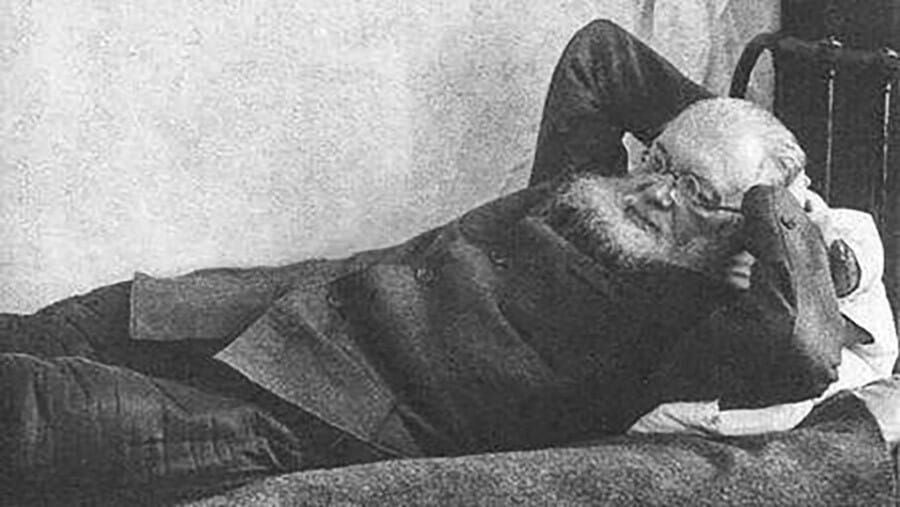
"It was God Who healed you through my hands. Pray to Him." — St Luke the Surgeon, Archbishop of Simferopol (1877–1961)
There is a moment, if you are the kind of person who is always trying to become more, when you catch yourself doing something that looks like healing but isn't quite.
You start in the low place. I haven't earned this yet. I haven't cracked the code. Everyone else had help, had timing, had a head start I never got. And then, if you've done any work on yourself at all, you turn it. You reframe. You tell yourself the pressure is a gift. That the lack of help is really an opportunity to work harder. That the weight is forging you into something stronger, something refined. Steel, you say. This is making me steel.
And that is better than the shame. It's a nobler story. But look closely at the shape of it, because it matters.
No help, so I work harder. More pressure, so I grow stronger. More weight, so I become refined.
Every clause adds load. The comfort you offered yourself was more forging. You upgraded from I am failing to I am being forged — and you called it peace. But it's the same engine underneath. Your worth is still something being produced under pressure. Still earned. Still owed. You just gave the debt a more heroic name.
Here is the trouble with steel.
Steel is only worth something once it's finished. Under the hammer, mid-fire, it is just hot metal in pain. If you locate your worth in the steel you will one day become, then you are not allowed to be worth anything now — not until the forging is done. And the forging is never done. There is always another blow, another fire, another degree of refinement you haven't reached. So you live your whole life on the anvil, glowing, aching, certain that your value is arriving later, in some finished version of you that never quite comes.
I want to offer you a different order of things. Not less work. A different fire.
You can work hard because it refines you, and still believe you are already whole before the refining. These are not opposites. A father loves his child and still wants them to grow — but the growing was never the condition of the love. The love came first. The love is why the growing matters at all.
The steel was already precious as ore. It was worth something in the ground, unshaped, unstruck, long before anyone lit a fire. The refining doesn't make it worthy. It makes it useful. Those are different words, and the difference is the whole of your peace.
So try flipping the sentence. Not I work hard so that I will be worth something. Instead: I am already worth something — that is why I am worth refining.
Read it again, because your whole exhaustion lives in the order of those words.
When the fire is lit by shame — I'll be enough once I've suffered enough — it burns the one standing in it. It has to. There is no amount of suffering that finally satisfies a fire like that, so it consumes you looking for the number. But when the fire is lit by love — I am enough, and I am becoming more — the same heat that once destroyed you begins to shape you instead. Same steel. Same hammer. Same long, hard hours. Different fire.
The Eastern Church has a word for the different fire. It calls it synergy — synergeia — the working-together of God's grace and human effort. It is one of the quiet radicalisms of Orthodox thought. The West has spent centuries arguing over whether salvation is by grace or by works, as though a soul were a ledger and you had to know who was paying. The East mostly refused the question. Grace and effort were never rivals. They were partners. God does not wait at the finish line to see if you earned it. He is in the fire with you, His hand over yours on the hammer, and your labour is not the price of His love but the answer to it. You are not working to win grace. You are working because it is already given, already moving through you, already yours.
Which means the effort was never evidence against your worth. It was evidence of it. You do not refine what is worthless. The forging itself is proof that Someone considered the ore precious enough to take up.
There was a man who lived this so completely that the Church now calls him a saint. Valentin Voino-Yasenetsky — Saint Luke the Surgeon, Archbishop of Simferopol. He was, at once, a world-class surgeon and a bishop, in a time and place that insisted a man could not be both. The Soviet state arrested him three times and sent him into exile for some eleven years, trying to force him to choose — the scalpel or the cross, the useful man or the holy one. He would not. In the exile camps, without proper instruments, he operated on peasants using whatever was at hand. Wherever they sent him, he kept an icon of the Mother of God above his operating table and prayed before every incision. When his students asked him about the source of his skill, he pointed past his own hands — the skill, he taught, was finally the grace of God working through human hands.
Notice what he did not do. He did not wait until the persecution ended to become worth something. He did not tell himself he would matter once the forging was finished. He worked in the fire, as a man already whole, already beloved, and let the fire make him useful rather than let it tell him what he was. The steel of Luke was precious in the exile camp, pliers in hand, long before the world processed past his relics in the tens of thousands. His worth was never on the anvil. Only his usefulness was. And that is the whole difference.
You are not hot metal waiting to become valuable. You are already the thing worth working on. That is why the work is holy — not because it earns you a soul, but because you had one all along, and the labour is just love, taking its time.
Light it with the love instead. And then, finally, get some rest. You were always allowed to.