✦ The Fourth Meditation ✦
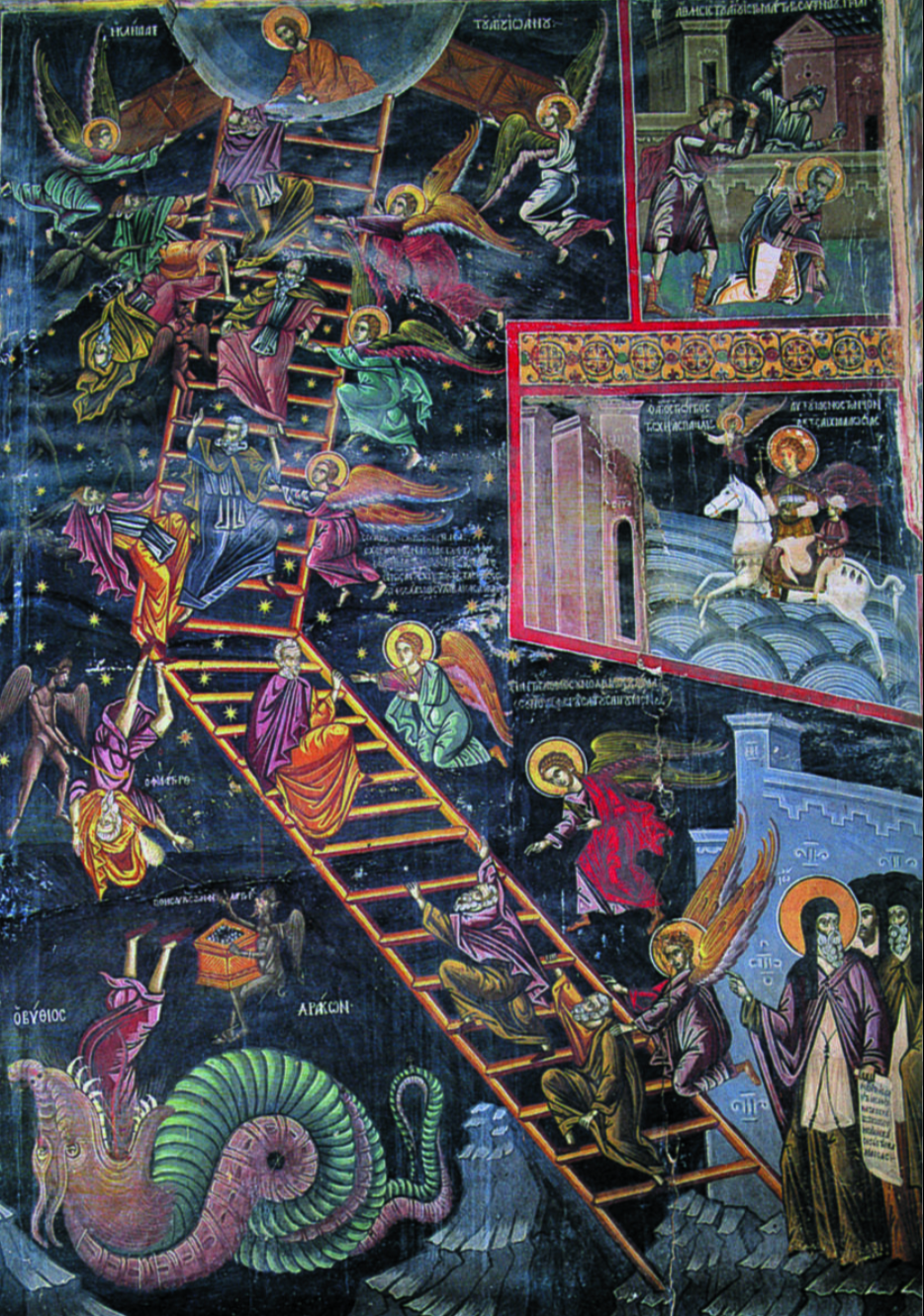
The Ladder That Is Built from Tears
(On the Fourth Week of the Fast, through the teaching of St. John Climacus)
By the fourth week of Great Lent, something strange begins to happen.
The first fervor of the Fast has faded.
The excitement is gone.
What remains is quieter, heavier, more honest.
This is the moment the Church places before us one of the most severe and compassionate teachers of the spiritual life:
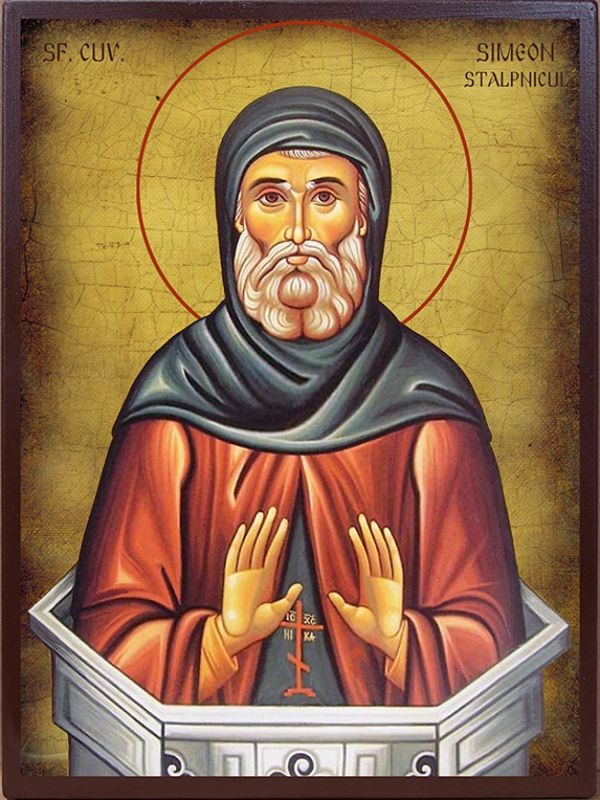
St. John Climacus.
A monk of Mount Sinai in the 7th century, John lived most of his life in silence, prayer, and radical obscurity. Yet his single work - The Ladder of Divine Ascent -became one of the most important spiritual books in the entire Orthodox world.
The title comes from the mysterious dream of the patriarch Jacob in Genesis:
“And behold, a ladder was set up on the earth, and the top of it reached to heaven; and the angels of God were ascending and descending on it.”
— Genesis 28:12
John says the Christian life is exactly like this ladder.
Not a leap.
Not a sudden transformation.
But thirty slow steps upward.
Each step a struggle.
Each step a healing.
And each step built from the strange material that God loves most:
humility.
Why the Fast Becomes Hard
By the fourth week many people feel discouraged.
The discipline begins to wear on the body.
The mind becomes restless.
Old habits return.
Some even begin to think:
Maybe I’m just not spiritual enough.
But St. John Climacus says something shocking.
This discouragement is not failure.
It is revelation.
He writes:
“The beginning of repentance is the beginning of salvation.”
Before we can climb, we must first see how far we have fallen.
Not as condemnation.
But as truth.
Because a person who thinks they are already standing at the top of the ladder will never take the first step.
The Step of Self-Knowledge
One of the most piercing lines in The Ladder says this:
“He who has come to know himself has arrived at the beginning of the fear of God.”
Self-knowledge is terrifying.
We see our impatience.
Our pride.
Our hidden resentments.
Our endless need to be admired.
We see how easily we judge others.
And suddenly the words of Christ become painfully clear:
“First remove the beam from your own eye, and then you will see clearly to remove the speck from your brother’s eye.”
- Matthew 7:5
But something else begins to grow in this moment.
Compassion.
Because once you see the chaos in your own heart, it becomes much harder to condemn someone else for theirs.
The Gift of Tears
Among the thirty steps of the ladder, one step appears again and again in the writings of the Fathers.
Penthos - holy mourning.
St. John Climacus writes:
“Tears after baptism are greater than baptism itself, though this may sound bold.”
He does not mean that tears replace the sacraments.
He means that tears reveal something deeper.
A heart that has finally begun to soften.
Not dramatic emotion.
But the quiet breaking open of the soul before God.
Anyone who has truly repented knows this moment.
When the heart suddenly realizes the distance it has traveled from God.
And yet at the same time senses His nearness.
So close.
So patient.
So endlessly forgiving.
Why So Many Hearts Feel Heavy
There is a strange sadness that hangs over our time.
People have everything previous generations dreamed of.
Comfort.
Technology.
Entertainment.
Infinite information.
And yet the heart remains restless.
St. Augustine once said:
“You have made us for Yourself, O Lord, and our heart is restless until it rests in You.”
No success can quiet the soul.
No recognition can heal the loneliness.
No pleasure can satisfy the deeper hunger of the heart.
The ladder John describes is not about becoming impressive.
It is about becoming free.
Free from the tyranny of pride.
Free from the constant need to prove ourselves.
Free from the endless noise inside our own minds.
The Cross in the Middle of the Climb
Climbing a ladder is exhausting.
And the higher we climb, the more we see how easily we could fall.
This is why the Church, in her wisdom, never lets us climb alone.
In the center of the Fast stands the Cross.
Not as a threat.
But as reassurance.
Christ has already climbed the ladder for us.
And at the top He did not find glory.
He found a Cross.
Which means the path upward always passes through humility.
Through patience.
Through quiet endurance.
But it also means something else.
The ladder is not built by our strength.
It is built by grace.
The Hidden Step
Near the end of his book, St. John Climacus says something that surprises many readers.
The highest step of the ladder is not heroic sacrifice.
It is not intellectual brilliance.
It is love.
He writes:
“Love is the banishment of every kind of contrary thought.”
When love fills the heart, the war of thoughts begins to quiet.
The soul rests.
And suddenly prayer becomes as natural as breathing.
But love cannot grow in a heart filled with pride.
Which is why the ladder begins so low.
With repentance.
With tears.
With honesty before God.
A Prayer for the Fourth Week
If you feel tired this week…
If the Fast feels heavy…
If you have discovered things about your heart that you wish you had never seen…
Do not run away.
You have reached the beginning of the ladder.
St. John Climacus writes one final line that echoes through the centuries:
“Let your prayer be completely simple.”
Tonight, stand quietly before God.
Do not try to impress Him.
Do not try to sound spiritual.
Just say what the heart already knows:
Lord, I am weak.
But You are merciful.
Help me climb.
And if tears come, do not push them away.
The saints say those tears are not weakness.
They are the first steps of the ladder.
And somewhere above us... unseen, patient, and full of love... Christ is waiting.
Not at the bottom.
But at the top.
Holding the ladder steady for us.